
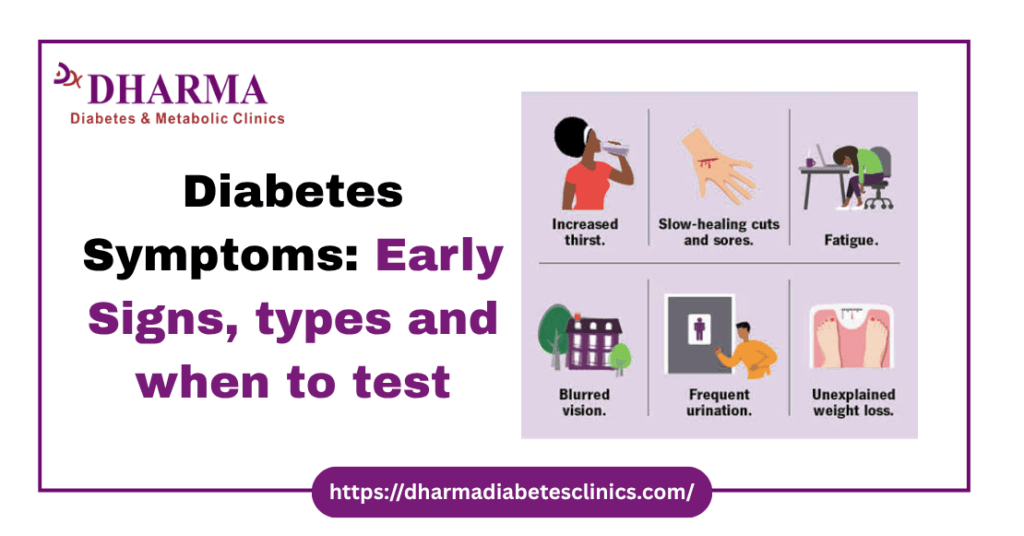
Diabetes symptoms include unusual thirst, frequent urination, tiredness, blurred vision and unexplained weight loss. Some people, especially those with type 2 diabetes, have no obvious symptoms. A symptom checklist cannot confirm diabetes: blood tests are needed to establish whether your blood sugar is above the diagnostic threshold.
If you are asking, “What are the symptoms of sugar?”, this guide explains the warning signs of diabetes mellitus and what to do next. Notice changes from your usual health, rather than waiting until you have every symptom.
What are the early diabetes symptoms?
The three classic diabetes symptoms are increased thirst, frequent urination and increased hunger. Fatigue, blurred vision, weight loss, slow-healing wounds or repeated infections may also prompt testing.
These signs and symptoms of diabetes vary: having one symptom does not prove diabetes, and having none does not exclude it.
The American Diabetes Association warning signs identify these changes:
- More thirst: drinking more than usual without feeling satisfied.
- More urination: repeated toilet trips, including overnight.
- Increased hunger: feeling hungry despite eating.
- Unexplained weight loss: becoming lighter without trying.
- Persistent tiredness: unusual weakness or reduced energy.
- Blurred vision: difficulty seeing clearly.
- Slow healing: cuts or sores taking longer to improve.
- Repeated infections: including urinary or yeast infections.
- Tingling or numbness: especially in the hands or feet.
- Mood changes: feeling unusually irritable.
This list is not a diagnostic score. Seek advice without waiting for every symptom.
Why does diabetes cause thirst and frequent urination?
High blood sugar can cause extra glucose to pass into urine, pulling water with it. Losing more fluid makes you urinate more and feel thirsty. This explains why these symptoms often occur together.
Persistent changes deserve assessment, although thirst and frequent urination can also have other causes.
Diabetes UK explains these connected symptoms. More hunger alongside weight loss is another combination to mention when arranging a test.
Which diabetes symptoms need urgent medical care?
Seek emergency care for possible diabetes accompanied by vomiting, abdominal pain, deep or rapid breathing, fruity-smelling breath, confusion or severe drowsiness. These can signal diabetic ketoacidosis, a dangerous shortage of insulin.
Severe dehydration and confusion can also occur in other diabetes emergencies; symptoms matter even without a glucose reading.
| What you notice | What to do |
| Thirst or frequent urination with the emergency signs above | Go to an emergency department immediately. |
| Rapidly developing thirst, urination and weight loss, especially in a child | Arrange medical assessment the same day for possible type 1 diabetes. |
| Persistent mild symptoms, repeated infections or slow-healing wounds | Arrange a clinical assessment and blood testing promptly. |
The NHS type 1 guidance support these distinctions. Do not delay urgent care to fast for a test.
How do type 1 and type 2 diabetes symptoms differ?
Type 1 and type 2 diabetes share many symptoms, but their usual speed of onset differs. Type 1 often becomes noticeable over days or weeks; type 2 may develop quietly over years. Age, body size and symptom severity alone cannot identify the type, so testing and clinical assessment matter.
| Feature | Type 1 diabetes | Type 2 diabetes |
| Typical symptom onset | Often days or weeks; sometimes slower in adults | Often gradual over years |
| Common clues | Thirst, urination, weight loss, tiredness | Similar symptoms, infections or slow healing |
| Age | Can develop at any age | Can affect adults, teenagers and children |
| Important caution | Rapid deterioration may indicate ketoacidosis | No obvious symptoms does not rule it out |
Type 1 involves loss of insulin-producing cells; type 2 involves insulin resistance and often declining insulin production.
For the underlying differences, read our types of diabetes guide.
What are type 1 diabetes symptoms in children and adults?
Type 1 diabetes symptoms commonly include increased thirst, frequent urination, tiredness and weight loss. Children may start wetting the bed again or have heavier nappies. Adults can develop type 1 diabetes too, sometimes more slowly. New symptoms suggesting type 1 need urgent assessment rather than a trial of diet changes.
The NHS describes four memorable clues: toilet, thirsty, tired and thinner. Vomiting or unusual breathing changes require emergency help.
Can type 2 diabetes or prediabetes have no symptoms?
Type 2 diabetes symptoms can be mild, develop gradually or be absent. Prediabetes also usually causes no symptoms, so feeling well cannot establish that glucose is normal.
If you have risk factors, such as a close family history or previous gestational diabetes, ask about screening instead of waiting for symptoms.
Our prediabetes guide explains the next steps after a borderline result. Prediabetes does not inevitably progress to type 2 diabetes.
Can itchy skin or a dark neck indicate diabetes?
Itching can occur with dry skin or infections, including genital yeast infections, but it is not specific to diabetes. Dark, thick, velvety skin around the neck, armpits or groin may indicate insulin resistance.
These patches, called acanthosis nigricans, are a reason to discuss testing, not a diagnosis by appearance.
Can diabetes cause tingling or numb feet?
Diabetes can damage nerves over time, causing tingling, burning, pain or reduced sensation in the feet. These problems may already be present when previously unrecognised diabetes is diagnosed, but other conditions can also cause them.
Persistent numbness or a foot wound needs assessment rather than being labelled an early symptom alone.
Learn about diabetic foot assessment in Greater Kailash.
Are diabetes symptoms different in women and men?
Women and men share the main diabetes symptoms, including thirst, urination, fatigue and blurred vision. Repeated vaginal yeast infections may be a clue in women.
Men may experience erectile difficulties, particularly with diabetes-related nerve or blood-vessel damage. These problems have other possible causes and should be assessed without embarrassment.
Does gestational diabetes cause noticeable symptoms?
Gestational diabetes usually causes no noticeable symptoms, so pregnancy screening is important even when you feel well. Testing is commonly performed between 24 and 28 weeks, with earlier assessment when indicated.
Follow your maternity team’s testing schedule; thirst or tiredness alone cannot confirm or exclude diabetes during pregnancy.
How can you check whether you have diabetes?
Arrange a clinical assessment and blood tests to check for diabetes. Doctors may use fasting plasma glucose, HbA1c, an oral glucose tolerance test or a random plasma glucose test when symptoms are present.
A home glucose meter or an online symptom checker cannot, by itself, confirm the diagnosis.
- Describe the changes: when symptoms started, weight changes, infections and family history.
- Follow the test instructions: fasting glucose requires at least eight hours without calories; plain water is allowed. HbA1c does not require fasting.
- Review the results: an abnormal result generally needs confirmation unless clear symptoms and diagnostic glucose results establish diabetes.
The ADA diagnostic criteria include:
| Test | Prediabetes range | Diabetes range |
| HbA1c | 5.7–6.4% | 6.5% or above |
| Fasting plasma glucose | 100–125 mg/dL | 126 mg/dL or above |
| Two-hour plasma glucose after a 75 g oral glucose tolerance test | 140–199 mg/dL | 200 mg/dL or above |
| Random plasma glucose with classic symptoms | No diagnostic prediabetes range | 200 mg/dL or above |
These are diagnostic thresholds for nonpregnant people, not daily treatment targets. Pregnancy uses different testing criteria. A two-hour reading after an ordinary meal is not the same test as an oral glucose tolerance test.
Our diabetes test guide for Delhi explains available assessments.
Can symptoms continue despite a normal home glucose reading?
A normal home reading shows glucose at one moment and cannot explain persistent symptoms by itself. Your doctor may arrange laboratory testing or investigate other causes.
HbA1c reflects an average over months; it should not be used alone to dismiss rapidly developing symptoms suggesting type 1 diabetes.
Anaemia and some haemoglobin variants can affect HbA1c. Bring previous reports and medicines to your appointment. Continuous glucose monitoring can help selected patients track patterns, but it does not replace an initial diagnostic assessment.
What are the side effects of diabetes if untreated?
People searching for the “side effects of diabetes” usually mean its complications. Persistently high glucose can damage blood vessels and nerves, affecting the eyes, kidneys, feet and heart.
These complications differ from the early symptoms that prompt testing and from adverse effects caused by a particular diabetes medicine.
Regular care addresses glucose, blood pressure, cholesterol, kidney health, eye checks and foot care. NIDDK’s complication-
What should you do after noticing diabetes symptoms?
Arrange the appropriate assessment, using the urgency guide above, and bring previous blood reports, your medicine list and a brief symptom timeline. Ask which tests you need and when results should be reviewed.
If diabetes is diagnosed, ask about its type, treatment, monitoring and what to do when unwell.
For everyday meal planning, read our healthy food for diabetic patients guide. Food changes support care, but should not delay testing or replace prescribed treatment.
For a routine assessment in Delhi or Gurugram, book a consultation with Dr. Mudit Sabharwal at Dharma Diabetes Clinics. Take emergency symptoms directly to emergency care.
What else should you know about diabetes symptoms?
Diabetes symptoms raise questions about urine changes, low sugar, test results and whether the condition can improve. The answers below address those practical concerns.
Use them to prepare for a consultation; your symptoms, medicines, examination and blood results need to be considered together when deciding the next step.
What colour is urine when you have diabetes?
There is no urine colour that confirms diabetes. Urine appearance can change with hydration, foods, medicines or infection. Frequent urination with unusual thirst deserves assessment, but diagnosis relies on blood testing.
Persistent unexplained colour changes or any blood in the urine should also be discussed with a clinician.
How do high blood sugar symptoms differ from low blood sugar?
High blood sugar symptoms often include thirst and frequent urination; low blood sugar can cause shaking, sweating and sudden hunger. Check glucose if possible. For many people with diabetes, below 70 mg/dL is low, follow your prescribed treatment plan. Confusion, seizures or inability to swallow need emergency help.
What is normal blood sugar by age?
For nonpregnant adults, normal fasting plasma glucose is usually 70–99 mg/dL, and normal HbA1c is below 5.7%. Diagnostic thresholds do not change simply because someone is older.
Treatment targets after diagnosis can differ according to health, medicines and the risk of low blood sugar; discuss your individual targets with your doctor.
Can diabetes symptoms go away?
Diabetes symptoms may improve when glucose is managed, but feeling better does not prove diabetes has disappeared. Some people with type 2 diabetes achieve remission, which requires ongoing monitoring and is not a guaranteed permanent cure.
Type 1 diabetes requires ongoing treatment, including insulin; do not stop medicines because symptoms improve.
What drink lowers blood sugar immediately?
No drink, including lemon water or a “golden drink”, is a reliable emergency treatment for high blood sugar. Water can support hydration, but it cannot replace insulin or prescribed treatment.
If you feel unwell or have emergency symptoms, seek medical help instead of waiting for a home remedy to work.
How much does diabetes testing cost in Delhi?
The cost depends on which tests are needed, the laboratory and whether consultation or sample collection is included. Ask for an itemised current quote for the recommended tests rather than assuming every diabetes package includes the same assessment. Dharma Diabetes Clinics can explain the recommended assessment and associated consultation charges.
FAQs
Can diabetes symptoms come and go?
Yes. Mild diabetes symptoms can come and go, but this doesn’t mean diabetes has resolved. Blood tests are needed to check blood sugar.
Can diabetes be cured, or does it go away?
Type 1 diabetes requires lifelong insulin. Type 2 may enter remission through sustained weight loss and lifestyle changes, but remission is not a cure.
How long can you have diabetes without knowing it?
Type 2 diabetes can go undetected for up to 7 years on average before diagnosis, since early symptoms are mild or absent, which is why complications are sometimes already present at diagnosis.
Can stress make diabetes symptoms worse?
Yes, stress hormones like cortisol raise blood sugar directly, and stress often disrupts sleep, diet, and exercise routines that help keep blood sugar stable, compounding the effect.
Can young people get type 2 diabetes?
Yes, type 2 diabetes is increasingly diagnosed in teens and young adults, largely linked to rising obesity rates, family history, and sedentary lifestyles, it’s no longer only a condition of later adulthood.
Do diabetes symptoms always mean I have diabetes?
Not necessarily thirst, fatigue, and frequent urination can also be caused by dehydration, thyroid issues, or certain medications. Symptoms are a reason to get tested, not a diagnosis on their own.
