
Medical Disclaimer: This article is for information only. It is not medical advice. Always talk to a qualified doctor before starting or stopping any GLP-1 therapy.
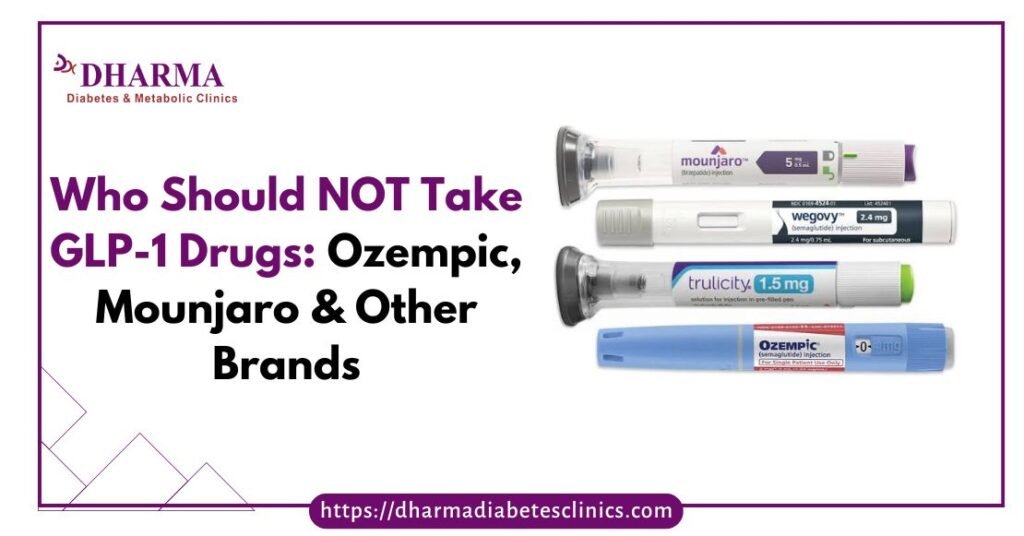
Who should not take GLP-1 drugs? You should avoid them if you have a history of thyroid cancer, pancreatitis, or severe stomach problems. Pregnant women, breastfeeding mothers, people with type 1 diabetes, and anyone allergic to semaglutide or tirzepatide should also stay away. These drugs are strong and not safe for everyone. At Dharma Diabetes Clinics, Dr. Mudit Sabharwal checks every patient carefully before prescribing. For patients looking at all GLP-1 options, see our complete guide to semaglutide generics in India. Here is the full list of who should not take GLP-1 drugs and why.
Who Should NOT Take GLP-1 Drugs: Absolute No-Go Conditions
Some people should never take these drugs. No exceptions. Here is who should not take GLP-1 drugs under any circumstances.
Thyroid Cancer History
If you or your family had medullary thyroid carcinoma, you should not take GLP-1 drugs. Animal tests showed these medicines can cause thyroid tumors. We do not know the exact human risk, but doctors and drug makers play it safe.
MEN2 Syndrome
This is a rare genetic condition that raises thyroid cancer risk. If you have MEN2, GLP-1 drugs are strictly off-limits.
Serious Drug Allergies
If you have ever had a severe allergic reaction to semaglutide (Ozempic/Wegovy), tirzepatide (Mounjaro/Zepbound), or any ingredient in these pens, you must avoid them.
Type 1 Diabetes
GLP-1 drugs are not for type 1 diabetes. They do not replace insulin. They can cause dangerous blood sugar swings in people whose bodies make no insulin.
Who Should NOT Take GLP-1 Drugs: Pancreatitis Risk
If you have had pancreatitis before, you should not take GLP-1 drugs. These medicines have been linked to pancreas inflammation in some patients. Starting them when your pancreas is already damaged raises the risk of another attack.
Dr. Mudit Sabharwal at Dharma Diabetes Clinics says: “If you have had pancreatitis even once, we look for other options. The risk of triggering another episode is too high for most patients.”
Watch for these warning signs: severe belly pain that goes to your back, nausea, vomiting, and fever. If you get these while on a GLP-1 drug, stop the drug and go to emergency care right away.
Who Should NOT Take GLP-1 Drugs: Severe Stomach Issues
Who should not take GLP-1 drugs? Anyone with severe gastroparesis. This means your stomach empties very slowly. Since GLP-1s deliberately slow down digestion, they can make this problem much worse.
Signs of gastroparesis include:
- Feeling full after eating very little
- Throwing up undigested food
- Bloating and stomach pain
- Unpredictable blood sugar swings
If you have these signs, get checked before thinking about any GLP-1 medicine. At Dharma Diabetes Clinics, we test how fast your stomach empties if patients report these problems.
Who Should NOT Take GLP-1 Drugs: Pregnancy and Breastfeeding
Pregnant women should not take GLP-1 drugs. Animal studies hint at risks like birth defects and pregnancy loss. There are not enough human safety studies.
Stop GLP-1 drugs at least two months before trying to get pregnant. If you become pregnant while taking them, stop right away and call your doctor.
Breastfeeding mothers should also avoid these drugs. No one knows for sure if they pass into breast milk or harm nursing babies.
Who Should NOT Take GLP-1 Drugs: Eating Disorders and Mental Health
Who should not take GLP-1 drugs? People with active eating disorders or a high risk of restrictive eating. These medicines suppress appetite so strongly that they can trigger or worsen anorexia, bulimia, or binge-purge cycles.
Dr. Mudit Sabharwal says: “Before we prescribe GLP-1s, we screen for eating disorders. If someone has a history of restrictive eating, they are someone who should not take GLP-1 drugs. We need other approaches that do not rely on appetite suppression.”
People with severe depression or psychiatric conditions also need extra care. Rapid weight loss and appetite changes can worsen mood problems.
Who Should NOT Take GLP-1 Drugs: Gallbladder Problems
People with active gallbladder disease should use GLP-1 drugs with caution. Rapid weight loss from these medicines can increase gallstone formation. Some patients also get gallbladder inflammation.
If your gallbladder has been removed, you may be able to restart GLP-1s after recovery, but only under doctor supervision. At Dharma Diabetes Clinics, we watch liver enzyme levels and gallbladder symptoms closely for patients with this history.
Who Should NOT Take GLP-1 Drugs: Age Limits
GLP-1 drugs are not approved for anyone under 18 in India. For adults over 65, extra care is needed. These drugs can be safe for older adults, but they raise the risk of:
- Muscle loss
- Dehydration from stomach side effects
- Kidney strain from rapid weight loss
- Falls and broken bones from reduced muscle
Dr. Mudit Sabharwal notes: “For patients over 65 at Dharma Diabetes Clinics, we start with lower doses, check more often, and always pair GLP-1s with protein goals and strength training to protect muscle.”
Who Should NOT Take GLP-1 Drugs: BMI and Weight Rules
Who should not take GLP-1 drugs for weight loss? People with a BMI below 27 and no weight-related health problems. In India, you typically qualify if:
- Your BMI is 30 or above (obesity), or
- Your BMI is 27.5 or above with a condition like prediabetes, PCOS, or fatty liver
These medicines are not for cosmetic weight loss. If you just want to lose 5 to 10 kg for a wedding or holiday, GLP-1s are not appropriate. The risks, side effects, and cost are not worth it for small weight goals.
Who Should NOT Take GLP-1 Drugs: Drug Mixing Risks
Who should not take GLP-1 drugs? People are already taking other weight loss medicines. Mixing GLP-1s with phentermine, orlistat, or other appetite suppressants increases side effects without proven extra benefit.
Some heart rhythm medicines like warfarin may interact with Mounjaro. Antidepressants are usually safe, but some may reduce weight loss results.
Always bring a full list of your medicines and supplements to your appointment. At Dharma Diabetes Clinics, we review every drug before prescribing GLP-1s.
Who Should NOT Take GLP-1 Drugs: Eye Problems
People with diabetic retinopathy need caution. Rapid blood sugar improvements from GLP-1s can temporarily worsen eye problems before they get better.
Dr. Mudit Sabharwal recommends: “If you have existing diabetic eye disease, we work with your eye doctor before starting GLP-1s. We may start with lower doses and go slower to protect your vision.”
Once your doctor confirms that GLP‑1 injections are safe for you, you can compare options in more detail in our full Mounjaro vs Ozempic guide, including expected weight loss, HbA1c change and side effects.
Frequently Asked Questions: Who Should NOT Take GLP-1 Drugs
1. Who should not take GLP-1 drugs if they have thyroid cancer history?
If any family member had medullary thyroid carcinoma, you should not take Ozempic or any GLP-1 drug. This is an absolute no-go.
2. Is Ozempic safe during pregnancy?
No. Pregnant women should not take Ozempic or any GLP-1 medicine. Stop at least two months before trying to get pregnant.
3. Can I take GLP-1 drugs if I have type 1 diabetes?
No. GLP-1 drugs are not approved for type 1 diabetes. They are for type 2 diabetes and weight loss in people who make insulin.
4. Who should not take GLP-1 drugs if they have stomach issues?
People with severe gastroparesis, constant nausea, or bowel blockage should avoid GLP-1s. These drugs slow digestion, which makes these problems worse.
5. Can I take Ozempic after gallbladder removal?
Usually yes, after you recover. But if you have active gallbladder disease or a history of gallstones, be careful and get medical supervision.
6. Are GLP-1 drugs safe for people over 65?
They can be, but need extra monitoring. Older adults face higher risks of muscle loss, dehydration, and falls. For seniors looking at these drugs, see our guide on GLP-1 weight regain prevention for long-term management strategies.
7. Can I take Mounjaro if I have pancreatitis?
No. People with a history of pancreatitis should not take Mounjaro or other GLP-1 drugs. The risk of another attack is too high.
8. Who should not take GLP-1 drugs for cosmetic weight loss?
Anyone with a BMI under 27 and no health conditions. These drugs are for treating obesity, not for losing a few kilos for an event.
9. Can I take GLP-1s with antidepressants?
Generally yes, but some antidepressants may reduce weight loss. Talk to your doctor about your specific medicines.
10. Should I stop GLP-1s if planning pregnancy?
Yes, stop at least two months before trying to conceive. If you become pregnant while taking these drugs, stop right away and call your doctor.
Who Should NOT Take GLP-1 Drugs: Get Checked First
Not everyone should take GLP-1 drugs. If you have any of the conditions above, or you are not sure if you qualify, book a consultation with Dr. Mudit Sabharwal at Dharma Diabetes Clinics. We will review your full medical history, current medicines, and health goals to find the safest path for your diabetes or weight management. Not sure who should not take GLP-1 drugs in your case? Our screening process answers that before you start. For current pricing on all GLP-1 options in Delhi-NCR, see our updated cost guide.
Call/WhatsApp: [+91-75030-20433]
Book online: Chat With Us
Locations: Greater Kailash Enclave-2, New Delhi
